


Why do crashes on the Arroyo Seco Parkway and the 210 get complicated?
Freeway crashes in Pasadena often involve several vehicles, a disputed lane change or a merge with almost no room. That makes fault harder to prove, and it is why a personal injury lawyer in Pasadena starts with the road itself. The design of each freeway shapes what happened.
The Arroyo Seco Parkway, the 110 between downtown Los Angeles and Pasadena, opened in 1940. Even so, it still has tight curves, short on-ramps with stop signs, and little or no shoulder. As a result, rear-end and sideswipe collisions there often turn on how fast each driver entered or left the parkway. Farther north, the 210 and the 134 meet just east of the Arroyo Seco. Heavy commuter merges through that interchange then produce chain-reaction crashes.
The California Highway Patrol investigates freeway collisions. Afterward, its report usually names the parties, the insurers and the officer’s view of the primary cause. That view is not binding, however. California uses comparative fault, so a driver found partly responsible can still recover a reduced amount. A Pasadena car accident lawyer reads the report with that in mind, and our guide to car accident claims explains how insurers split fault.
What should a Pasadena injury attorney know about pedestrian and cyclist cases?
A pedestrian or cyclist hit by a car usually claims against the driver’s auto insurance first. If that is not enough, the next source is their own uninsured or underinsured motorist coverage. Meanwhile, the city’s streets create some particular patterns in every Pasadena pedestrian accident.
- Colorado Boulevard and Old Town Evening crowds, restaurant valets and ride-share pickups put drivers and pedestrians in the same space. Unsignaled mid-block crossings are the usual trouble spots.
- The Rose Bowl loop Runners, cyclists and drivers share the roads around the stadium. On event days, traffic control also changes the usual rules of the road.
- Metro A Line crossings The light rail runs in the 210 median through much of the city but crosses some streets at grade. There, gate arms and signals decide who had the right of way.
- School and campus streets Blocks near Pasadena City College, Caltech and local schools carry heavy foot traffic at predictable hours.
Drivers must yield to people in marked and unmarked crosswalks under Vehicle Code § 21950. Even when the driver clearly caused the crash, though, the claim depends on medical records from the start. Treatment at Huntington Hospital or an urgent care the same day creates the first link between the collision and the injury.
Who pays for a fall in Old Town or at a Pasadena venue?
The person or business that controlled the property usually answers for a fall caused by a hazard it knew about or should have found. Civil Code § 1714 sets that general duty of care for everyone in California.
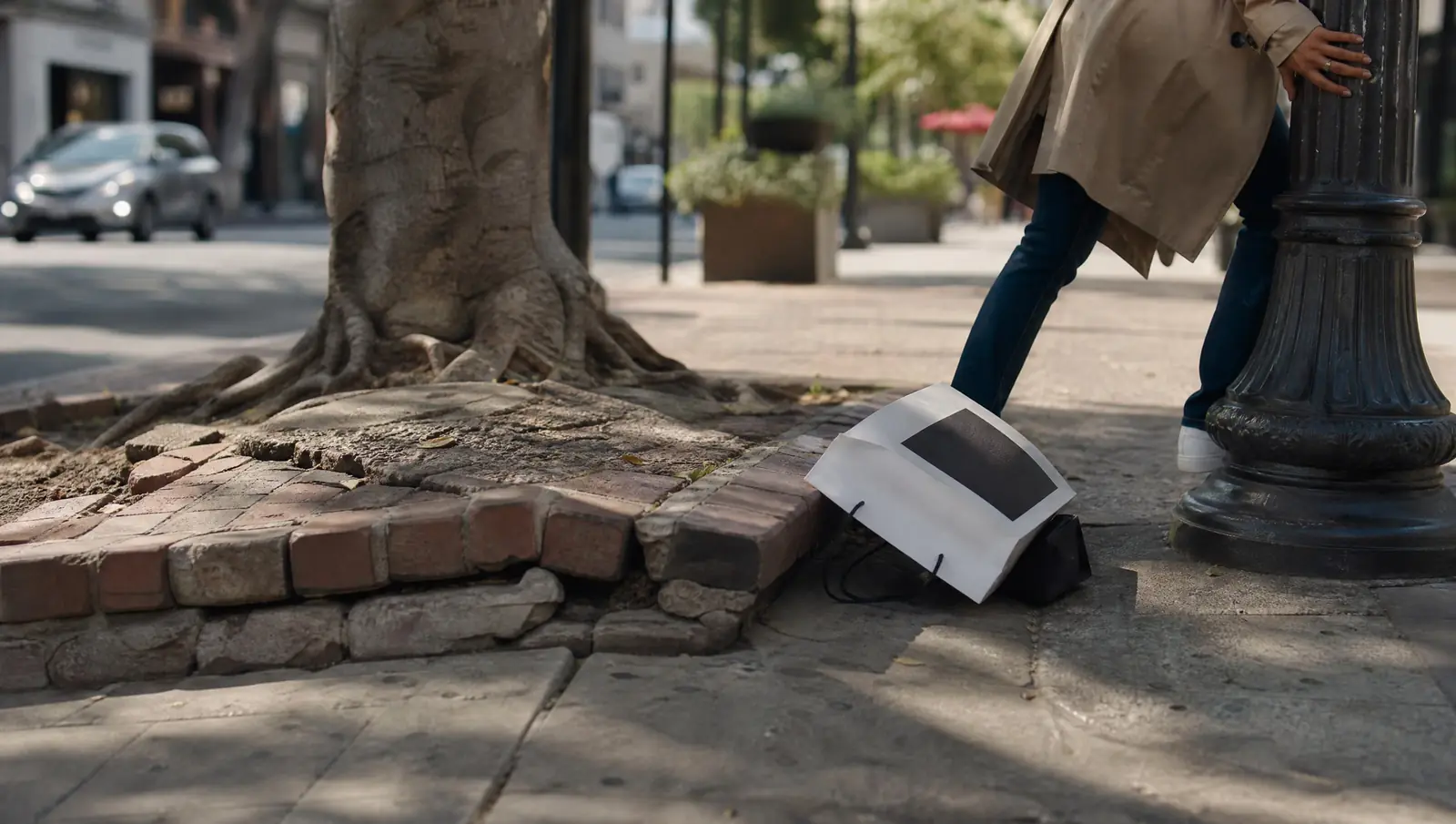
Pasadena’s mature street trees lift sidewalk slabs. Similarly, older commercial buildings in Old Town and along Lake Avenue have worn stairs, basement entrances and uneven thresholds. Inside a restaurant or shop, the tenant usually controls the floor. The landlord, by contrast, may answer for structural defects and shared areas. A public sidewalk usually belongs to the city, even where an adjoining owner has duties of its own.
A Rose Bowl injury adds one more layer, because the City of Pasadena owns the stadium while event operators run the day itself. For that reason, photographs of the exact spot, taken before anyone repairs it, often decide these cases. Our premises and fall injury guide covers the evidence in more detail.
What changes when the city, Metro or Caltrans is involved?
A claim against a public agency has a much shorter first deadline. Under Government Code § 911.2, the written claim generally has to reach the agency within six months of the injury. Only after the agency rejects it, or lets it lapse, can a lawsuit follow.
- City of Pasadena Streets, sidewalks, city vehicles, Pasadena Transit buses and the Rose Bowl.
- Metro The A Line, its stations and its buses.
- Pasadena Unified School District School property and school buses.
- Los Angeles County Roads and property in unincorporated Altadena next door.
- Caltrans State freeway design and maintenance.
Moreover, each agency has its own claim form and its own address for filing. So when a single crash involves a city bus on a Caltrans ramp, a personal injury lawyer in Pasadena may send two claims on the same day.
The six-month rule applies even when the injury seems minor at first. The California injury deadlines page sets out the two-year limit for private defendants under Code of Civil Procedure § 335.1 and the exceptions.
What should you do in the first weeks after a Pasadena injury?
The first few weeks decide how much evidence survives. That is because most of it sits with other people, and much of it disappears on a schedule.
- Get the right report The Pasadena Police Department handles crashes on city streets, while CHP handles the freeways. Note the report number before you leave the scene.
- Ask for video in writing Old Town shops, parking structures and apartment buildings run cameras that record over themselves. A short letter asking them to keep the footage often makes the difference.
- Keep treating Follow the plan your doctor sets, and keep every bill and visit summary. Otherwise, gaps in care give an insurer room to argue.
- Be careful on the phone An adjuster may call within days. Our note on recorded statements to insurers explains why you can decline one on that first call.
Where would a Pasadena personal injury lawyer file a lawsuit?
Los Angeles County Superior Court hears injury lawsuits arising in Pasadena. The court runs a courthouse on East Walnut Street in Pasadena. However, its local filing rules and the size of the claim decide where a given case goes, and many injury cases proceed in downtown Los Angeles. The court’s own website posts the current rules.
In practice, most claims never reach a courtroom. Instead, the insurer and the attorney exchange records and a demand, and many cases resolve at that stage or at mediation. The settlements and verdicts page explains how that negotiation works.
What does a Pasadena injury attorney at this firm cost?
The firm handles personal injury cases on a 33% contingency fee. You pay no attorney’s fee unless there is a recovery, but you may remain responsible for case costs and expenses. Those include filing fees, medical record charges and the cost of outside medical witnesses, and the written agreement spells them out. The fees and consultations page shows how the contingency fee and costs come out of a settlement.
Maria handles personal injury intake and can take the first call in English, Armenian, Russian or Spanish. The consultation is free and takes about thirty minutes, in person in Glendale, by phone or by video. For every type of claim the firm takes, see the personal injury practice overview, or get in touch with the date and the place it happened.