


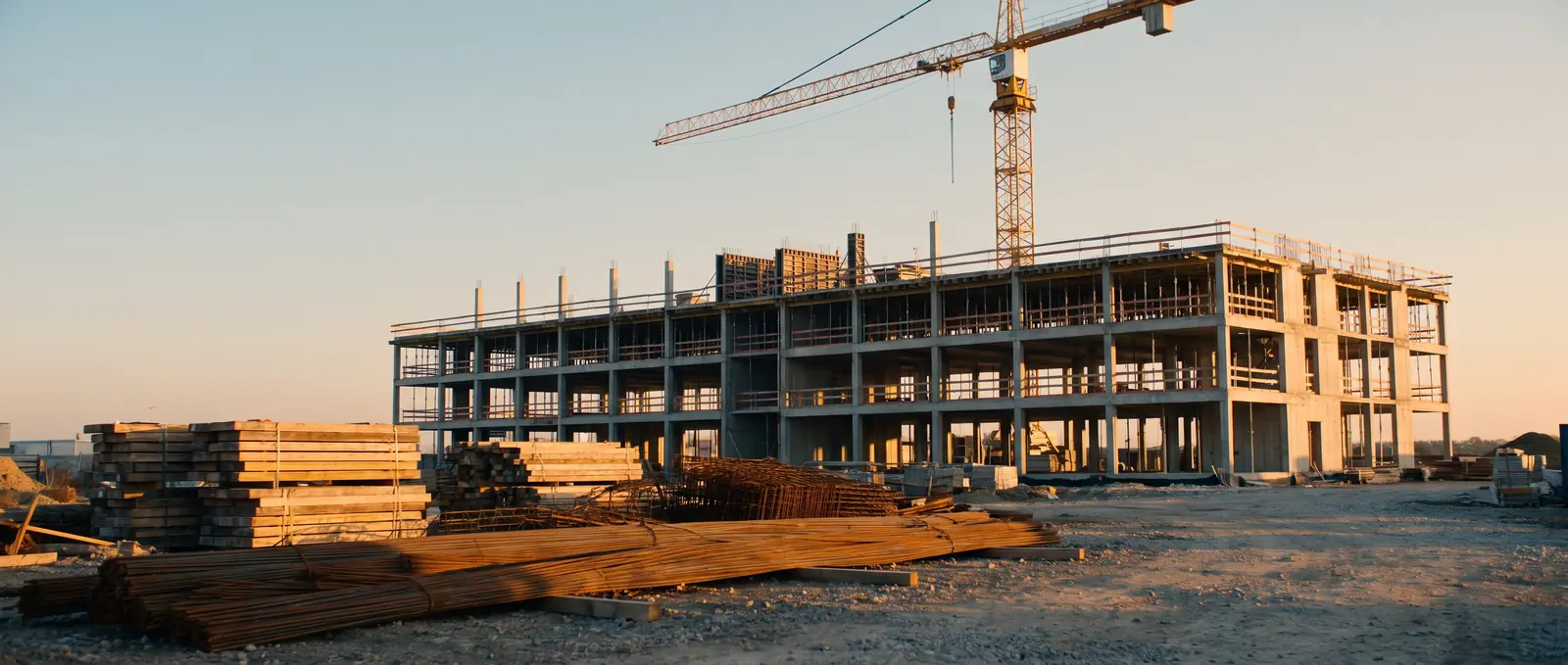
A construction injury claim can involve two separate cases. Workers' compensation pays medical care and wage benefits from your employer's insurer, without proving fault. If a third party, such as a general contractor, another subcontractor, a property owner or an equipment manufacturer, caused the injury, you may also bring a personal injury claim against them for losses workers' compensation does not cover.
Written and reviewed by
Last reviewed
| Against your employer | Workers' compensation, generally the only remedy (Labor Code §§ 3600, 3602) |
|---|---|
| Against others | A third-party injury claim where someone other than the employer was at fault |
| Report to employer | Within thirty days; claim form DWC-1 under Labor Code § 5401 |
| Third-party deadline | Generally two years from the injury (Code Civ. Proc. § 335.1) |
| Attorney fees | Injury claim: 33% contingency, no attorney's fee unless there is a recovery, though case costs and expenses may apply. Workers' comp: typically 15%, approved by the WCAB |
| First consultation | Free, about thirty minutes, in English, Armenian, Russian or Spanish |
Can you sue after a construction site injury?
You usually cannot sue your own employer after a construction site injury. However, a construction injury lawyer can often bring a personal injury claim against another party whose negligence caused it. That third-party claim runs alongside your workers’ compensation claim, not instead of it.
Under Labor Code §§ 3600 and 3602, workers’ compensation is the exclusive remedy against your employer. It pays medical treatment and disability benefits without proof of fault. Yet it does not pay for pain and suffering, and it replaces only part of lost wages. A construction site has many companies on it, and the exclusive-remedy rule protects only the one that employs you.
The firm handles both sides: the workers’ compensation claim and the third-party injury claim. It coordinates them so that one does not undercut the other, as part of its wider personal injury practice.
Who can be responsible for a construction injury?
Any company or person connected to the site, other than your employer, can be responsible if their negligence contributed to the injury. On a typical project, that means several possible defendants.
- General contractors Can be responsible when they controlled site safety and their decisions contributed to the injury. Scheduling, removing protections or ignoring a known hazard are typical examples.
- Other subcontractors A trade that left an unguarded opening, dropped material or disabled a safety device can face a construction accident lawsuit from another trade’s worker.
- Property owners Can be responsible for concealed hazards they knew about and failed to disclose, or where they kept control of the work.
- Equipment makers and rental companies A defective ladder, scaffold component, lift or power tool can support a product liability claim. The claim can run against the manufacturer, distributor or rental company.
- Drivers Delivery trucks, concrete trucks and passing motorists cause many roadside and work-zone injuries.
When is a general contractor or owner liable?
A general contractor or owner who hires an independent contractor is generally not liable for injuries to that contractor’s workers. There are, however, important exceptions. The general rule comes from Privette v. Superior Court (1993), and the exceptions come from later California Supreme Court decisions.

- Retained control The hirer kept control over safety conditions and exercised it in a way that affirmatively contributed to the injury (Hooker v. Department of Transportation, 2002).
- Concealed hazards The hirer knew of a hazard the contractor did not know about and could not reasonably discover, and failed to warn (Kinsman v. Unocal Corp., 2005).
- Own negligence The hirer’s own equipment, or its own negligent act, caused the injury.
Whether an exception applies depends on who directed the work, who supplied the equipment and what each party knew. Contracts, daily logs, safety meeting records and site photographs usually answer those questions.
How do workers’ comp and a third-party claim work together?
The two claims run in parallel and cover different losses. The workers’ compensation insurer also has a right to be repaid from the third-party recovery, so coordinating them well can make a large difference to what you keep.
| Workers’ compensation | Third-party claim | |
|---|---|---|
| Who pays | Employer’s insurer | The at-fault party’s liability insurer |
| Fault needed | No | Yes |
| Pain and suffering | Not paid | Recoverable |
| Lost wages | Partial, by formula | Full lost earnings and earning capacity |
| Decided by | Workers’ Compensation Appeals Board | Superior Court, by settlement or jury |
Under Labor Code §§ 3852 and 3856, the employer or its insurer can recover the benefits it has paid from a third-party recovery. Under § 3858, it can also claim a credit against future benefits. The insurer generally bears its share of the legal fees and costs of obtaining the recovery, which reduces its reimbursement. If the employer’s own negligence contributed to the injury, the court may reduce or bar the insurer’s reimbursement.
A construction injury is often both a workers’ comp claim and a third-party case at once. The page on third-party claims alongside workers’ comp explains the lien and credit rules in more detail, and a construction injury lawyer usually plans the two claims together from the start.
What are the most common construction injuries?
Most serious construction injuries come from falls, electrocution, and being struck by objects or caught in equipment. Each has its own evidence and its own likely defendants.

- Falls From scaffolds, ladders, roofs and unguarded floor openings. A scaffold fall can involve a missing guardrail or a plank that another trade moved. Cal/OSHA rules in Title 8 of the California Code of Regulations set standards for guardrails, fall protection and scaffolds.
- Struck-by injuries Falling tools and material, swinging loads, and vehicles reversing on site.
- Electrocution Contact with overhead lines or live circuits, often where another trade failed to de-energize or mark them.
- Caught-in injuries Trench collapses and injuries from unguarded machinery.
When a tool, machine, scaffold component or safety device fails, California product liability law can apply. Since Greenman v. Yuba Power Products (1963), a manufacturer can be strictly liable for injuries caused by a defect in its product, without proof of negligence. The failed equipment itself is the key evidence. Someone needs to preserve it rather than repair it or return it to the rental yard.
Employers must report a serious workplace injury to Cal/OSHA promptly. Any Cal/OSHA inspection file, citations and photographs can later become important evidence in the third-party claim.
What evidence matters after a construction injury?
The most important evidence shows who controlled the work and the equipment. It also shows what each company knew about the hazard. Much of it belongs to the companies on the site, and it can disappear as the project moves on. For that reason, a construction injury lawyer usually sends preservation letters within days.
- Contracts and subcontracts Show who was responsible for site safety, fall protection and equipment, and who carried insurance.
- Site records Daily logs, safety meeting sign-in sheets, incident reports and the site’s injury and illness prevention program.
- The equipment The ladder, scaffold, lift or tool involved, kept in the condition it was in at the time of the injury.
- Photographs and video Of the area, the missing protections and the equipment, taken before the site changes. Many projects also have camera feeds.
- Witnesses Co-workers and workers from other trades, whose contact details are easy to lose once a project ends.
Workers are often reluctant to name their co-workers or their employer, and they worry about their jobs. Labor Code § 132a prohibits an employer from discriminating against a worker for filing a workers’ compensation claim.

What deadlines apply after a construction injury?
You should report the injury to your employer within thirty days. The workers’ compensation claim form (DWC-1) then starts the claim under Labor Code § 5401. You generally must file the third-party injury lawsuit within two years under Code of Civil Procedure § 335.1.
- Report to your employer Within thirty days of the injury under Labor Code § 5400. Your employer must give you a DWC-1 claim form within one working day of learning of the injury.
- File the DWC-1 Starts the workers’ compensation claim. The page on filing a workers’ comp claim explains the process.
- Government claim, if a public entity is involved Within six months under Government Code § 911.2. This applies, for example, where a public agency owned the project or the equipment.
- Third-party lawsuit Generally within two years of the injury. The personal injury deadlines page sets out the rules side by side.
Does immigration or contractor status affect a claim?
Immigration status does not bar either claim. Labor Code § 3351 covers employees whether lawfully or unlawfully employed. Evidence Code § 351.2 also keeps immigration status out of California personal injury cases.
Being paid as an independent contractor does not settle the question either. Under the ABC test in Labor Code § 2775, the law presumes a worker is an employee unless the hiring business proves otherwise. Whether you are an employee decides whether workers’ compensation applies, and which companies you can sue. A construction injury lawyer looks at how the work was actually controlled, not only at the label on the paycheck.
What does a construction injury lawyer cost here?
The firm handles the third-party injury claim on a 33% contingency fee from any recovery, with nothing up front. If there is no recovery, you owe no attorney’s fee on it, though you may remain responsible for case costs and expenses. The written agreement explains those before you sign. On the workers’ compensation claim, a workers’ compensation judge approves the attorney’s fee under Labor Code § 4906. It is typically around 15% of the award and is paid from the award, with nothing up front. The fees and consultations page explains both.
Your first consultation is free, takes about thirty minutes, and covers both claims.